

The project stems from the need to modernize and make the preservation of Umbria’s agricultural heritage more transparent. Thanks to the collaboration between the Umbria Agri-Food Technology Park (3A-PTA) and TeamDev Ecosystem, the management of regional biodiversity has been transformed into an open digital ecosystem. The initiative, funded by PSR/CSR funds (Measure SRA16), represents a decisive step forward in transforming years of technical monitoring into a freely accessible tool for citizens and government agencies.
What Is the Regional Conservation and Safety Network?
At the heart of the project is the Regional Conservation and Safety Network, officially established by Article 69 of Regional Law 12/2015.
It is the operational tool that ensures the survival of species and breeds at risk of extinction, making it possible to inventory and monitor various categories of value: tree and herbaceous plant resources, mammals, poultry and rabbits, the Ligustica honeybee, and even microbial resources. The Network is not merely a technical list, but a dynamic conservation model divided into:
- In situ conservation: managed by approximately 230 “Custodian Farmers,” organizations, and citizens who preserve these resources directly in their natural environment.
- Active Community: a group of stakeholders who safeguard Umbria’s agricultural identity by promoting the exchange of knowledge.
- Multidisciplinary Survey: the Network monitors plant resources (trees and herbaceous plants), mammals, poultry and rabbits, the Ligustica honeybee, and even microbial resources.
Why the Geographic Component Is Essential
In a genetic conservation project, the “where” is just as crucial as the “what.” The geographic component is essential for:
- Historical identification: It allows us to map sites of extraordinary value—such as the centuries-old chestnut groves of Norcia—linking them inextricably to their local context.
- Operational planning: It enables the precise management of the distribution of propagation material and the monitoring of the species’ spread across the territory.
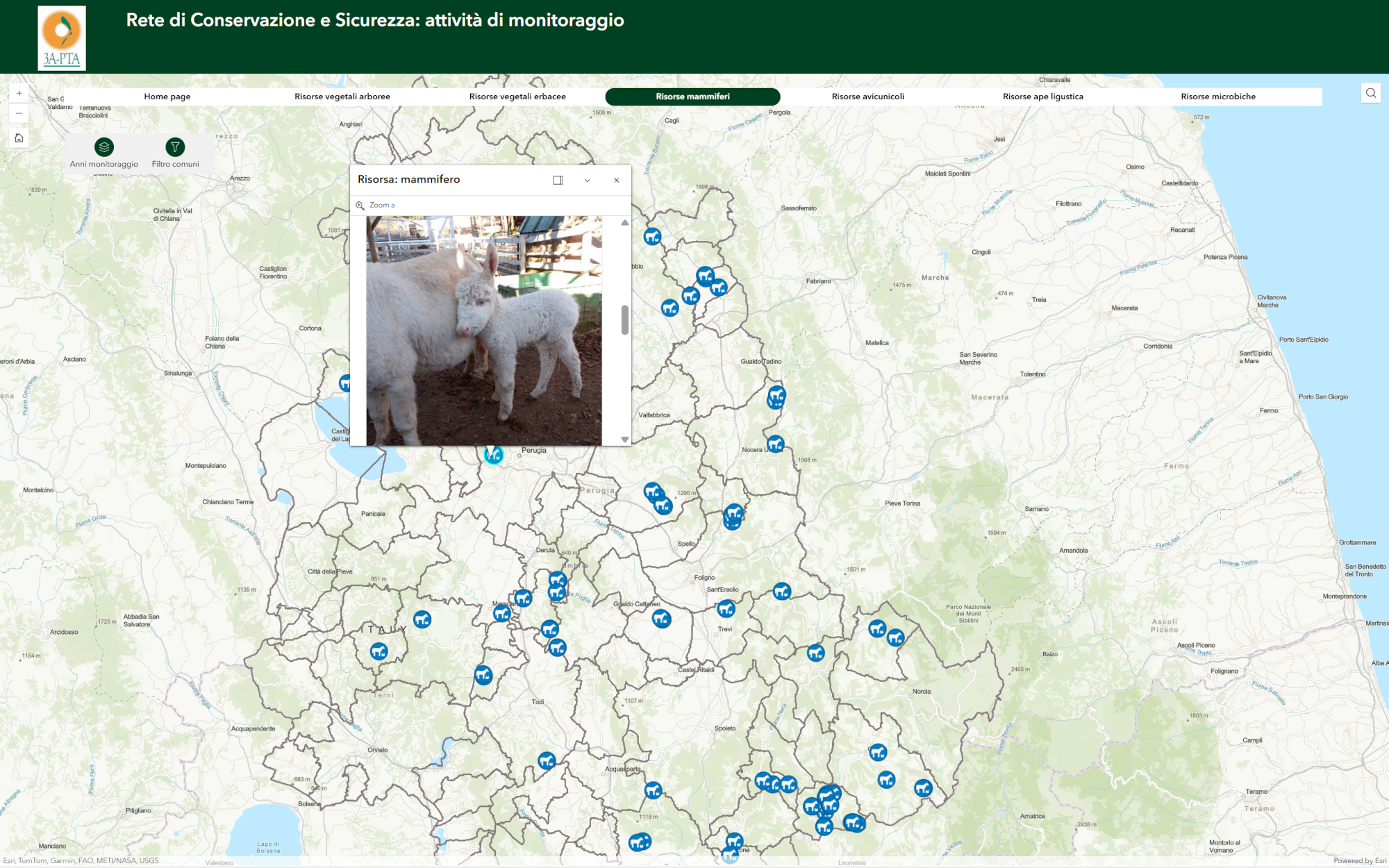
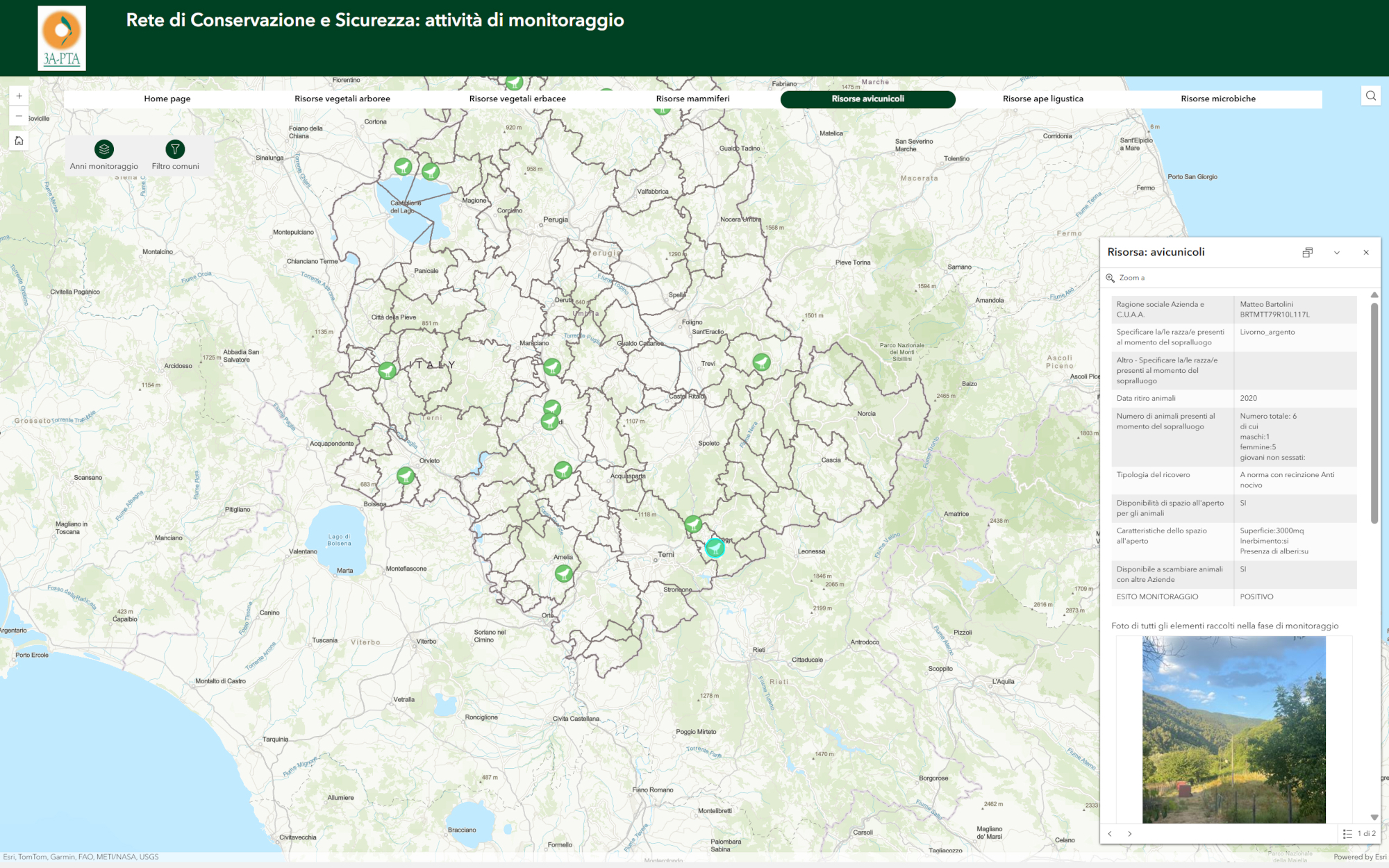
- Traceability and transparency: It transforms complex data into interactive maps that allow anyone to locate the custodians of a specific variety, making the impact of conservation efforts measurable.
The GIS Application
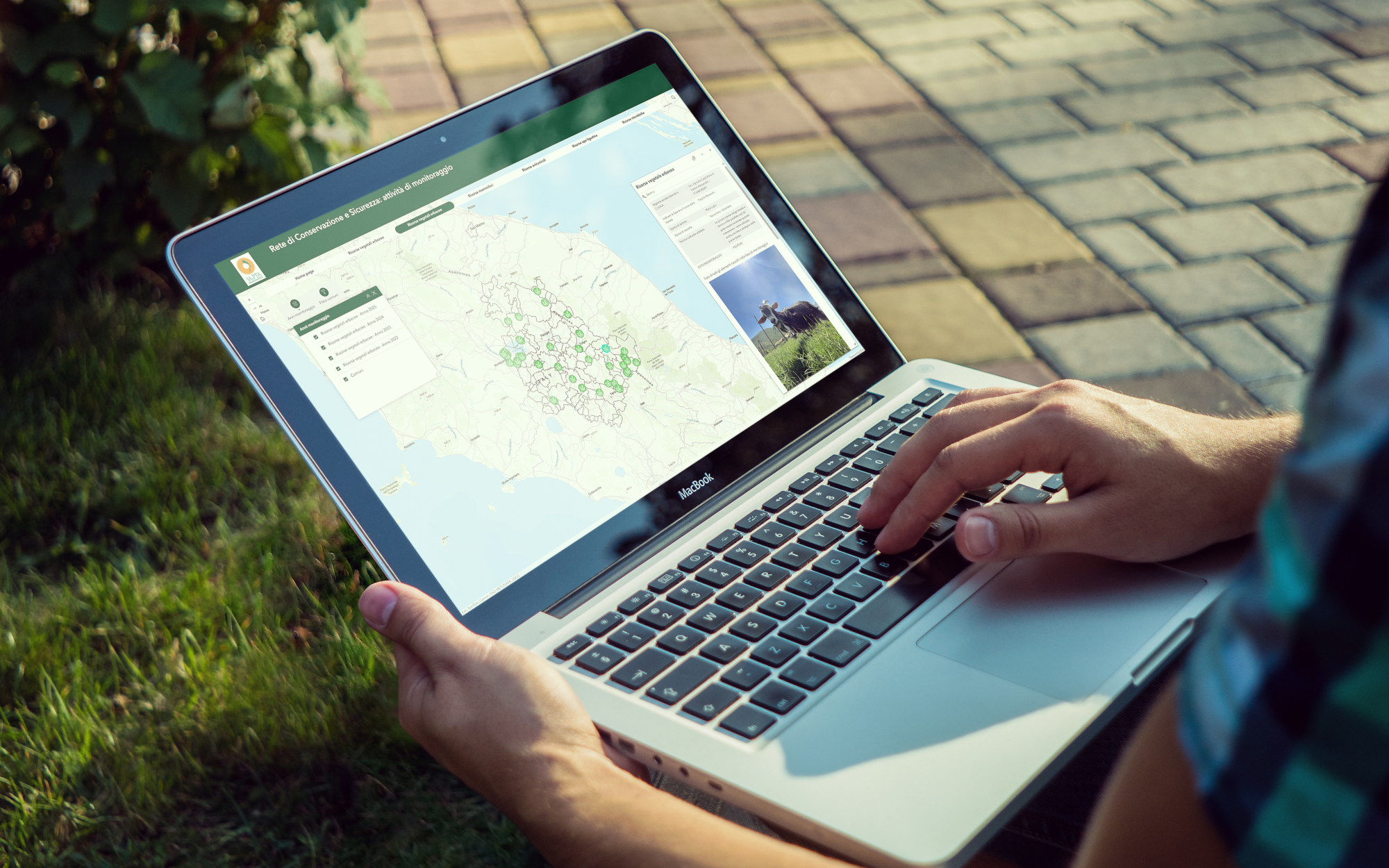
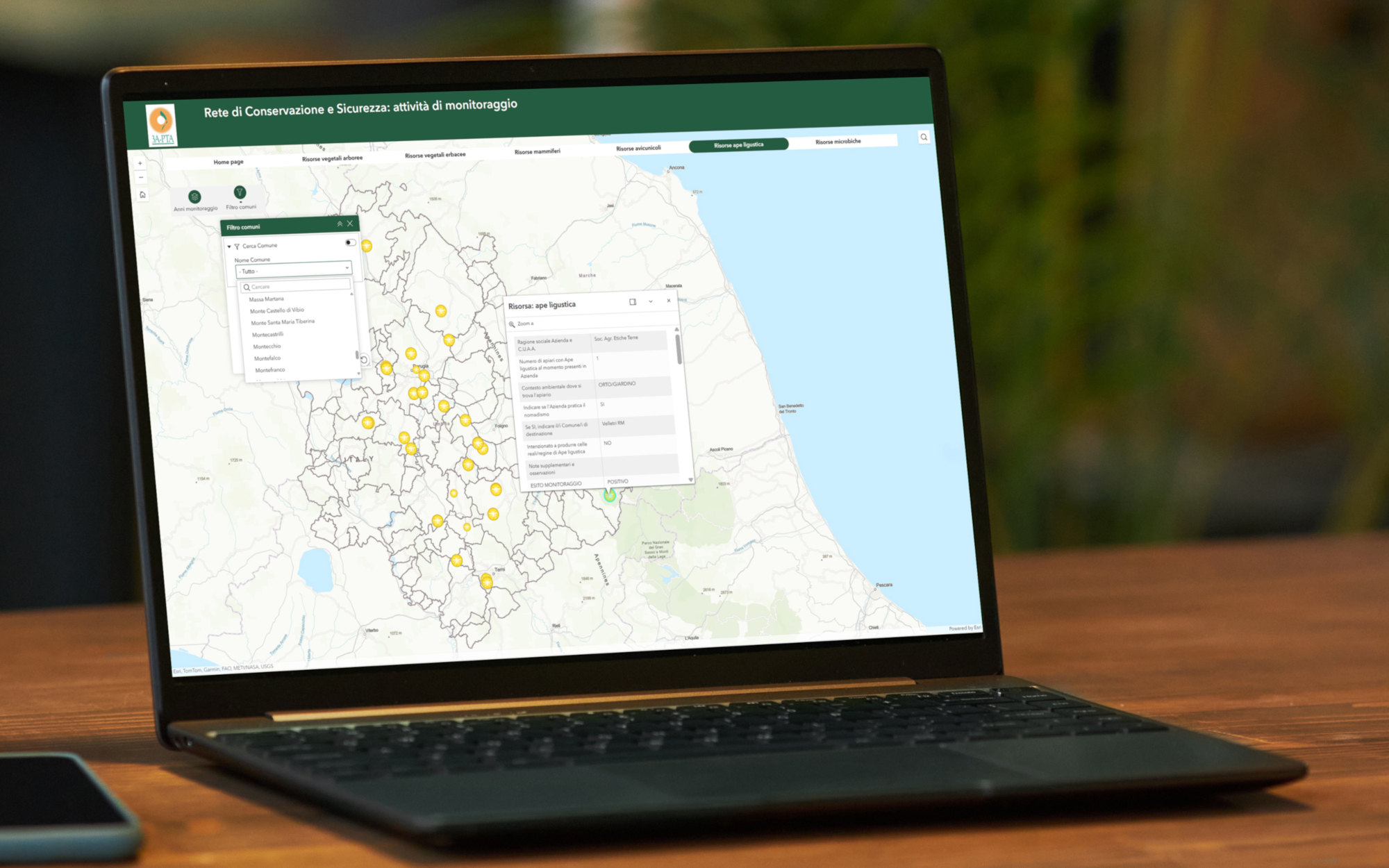
The technological infrastructure is based on a Gis applicationthat integrates fieldwork with data publication:
Real-time monitoring: 3A Park technicians use a dedicated application directly in the field, enabling instant data storage (already covering 70% of registered entities).
Georeferenced database: The data is processed on a platform (based on ArcGIS Experience technology) that allows information to be filtered by municipality or resource type.
Accessibility: The tool serves as a digital “compass,” making information that was previously confined to technical databases accessible to everyone.
Benefits
The adoption of this digital system brings tangible benefits on multiple levels:
- For the community: greater awareness of agricultural heritage and easier access to heirloom varieties and local breeds.
- For the custodians: recognition of their role and participation in an active exchange network that prevents farmers from becoming isolated.
- For the region: more effective “in situ” protection of genetic resources, ensuring that Umbria’s rural identity is not lost.
- For science: constant and precise monitoring that allows for the rediscovery of little-known varieties and the planning of targeted conservation efforts.